



Dr Sabia Mangat

10 Most Common Reasons for IVF Failure

ivf failure reasons

In vitro fertilization, or IVF, brings hope to many couples who want a baby. It is a special treatment where eggs and sperm are joined in a lab, and then a doctor places the embryo into the uterus. Many families get good news from IVF. But sometimes, IVF does not work

This can feel sad, confusing, and heavy. It is important to know the main IVF failure reasons so people can learn, prepare, and try again with better care.

This article explains the 10 most common IVF failure reasons in simple words. It also answers questions many people ask, like why does IVF fail, why IVF fails, and other IVF unsuccessful reasons.

1. Poor egg quality

Good eggs are needed to make a healthy embryo. As a woman gets older, egg quality often goes down. Sometimes even young women may have eggs that do not grow well. When egg quality is poor, embryos may stop growing or not attach to the uterus. This is one of the major IVF failure reasons because without healthy eggs, pregnancy is harder to achieve.

2. Poor sperm quality

Sperm must be strong, well-shaped, and able to move. If sperm are weak, slow, or few, they may not join with the egg well. This can happen because of health problems, stress, smoking, alcohol, or infections. Poor sperm quality is also among common IVF failure reasons because weak sperm can lead to weak embryos.

3. Hormone imbalance

Hormones are the body’s chemical messengers. They control ovulation, lining growth, and support early pregnancy. If hormones like thyroid, prolactin, or progesterone are not balanced, IVF may fail. Hormone imbalance is counted among key IVF failure reasons because the body is not ready to support the embryo.

4. Problems with the uterus

The embryo needs a safe place to stay and grow. If the uterus has polyps, fibroids, scars, or shape problems, it can be hard for the embryo to attach. Thin uterine lining can also cause trouble. These uterus problems are IVF unsuccessful reasons because the embryo cannot settle and grow well.

5. Chromosome problems in embryos

Sometimes embryos have extra or missing chromosomes. These are tiny parts inside cells that carry genes. When there is a chromosome problem, the embryo may not grow or implant. This is a natural body process and not anyone’s fault. These chromosome issues are frequent IVF failure reasons and can cause early pregnancy loss or no pregnancy at all.

6. Implantation failure

Implantation is when the embryo sticks to the lining of the uterus. Sometimes the embryo reaches the uterus but does not attach. This may happen because of immune problems, poor lining, hormone imbalance, or embryo issues. Implantation trouble is one of the common IVF failure reasons people face and leads to cycles with no pregnancy.

7. Age of the woman

Age is a very important factor in IVF success. Women above 35 may have fewer eggs and more egg problems. After 40, the chance of success drops even more. Age is one of the clear IVF failure reasons because both egg number and egg quality fall with time. This is why doctors often suggest not delaying treatment for too long.

8. Lifestyle factors

Smoking, alcohol, drugs, poor sleep, and stress can harm fertility in both men and women. Being very overweight or very underweight can also affect IVF success. Unhealthy lifestyle habits are common IVF failure reasons that people can control. Simple changes like eating healthy food, moving the body daily, and quitting smoking can help.

dr sabia mangat

9. Medical conditions

Some health conditions like endometriosis, PCOS, untreated thyroid disease, or diabetes can affect IVF success. Infections and autoimmune diseases may also cause trouble. These health problems can be IVF unsuccessful reasons unless treated well. Good medical care before and during IVF can improve the chances of a positive result.

10. Wrong timing or Plan

IVF needs careful timing of medicines, egg pickup, and embryo transfer. If timing is off, results can be poor. Using the wrong dose of medicines or the wrong method for the patient can also reduce success. Sometimes doctors need to change plans in the next cycle. This makes wrong timing and poor planning important IVF failure reasons.

What can you do next?

If your IVF cycle did not work, remember that you are not alone. Talk openly with your doctor. Ask about your personal IVF failure reasons and what can be improved. You can ask again: why does IVF fail in my case and what tests are needed?

Your doctor may suggest lifestyle changes, new medicines, or different lab methods. Sometimes donor eggs or sperm are advised when egg or sperm quality is very poor. In some cases, doctors may check the uterus again or treat infections or hormone problems. These steps help answer why IVF fails and how to increase success next time.

FAQs

IVF may fail because of poor egg or sperm quality, embryo chromosome problems, uterine issues, hormone imbalance, age, medical conditions, or timing and treatment problems.

Yes, stress can affect hormones, sleep, and habits. It may not directly stop implantation but can lower success chances by upsetting body balance and treatment.

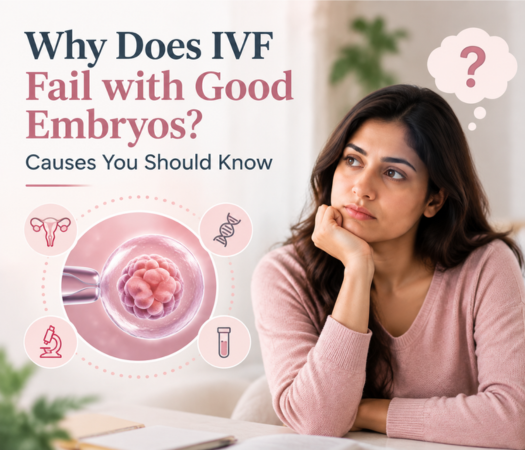
IVF can still fail with good embryos because implantation does not occur, uterine lining weak, hormone imbalance, chromosome problems, or timing and treatment issues interfere.

Yes, IVF can fail after implantation. This is pregnancy loss and may sometimes happen due to chromosome problems, hormone issues, infections, or uterine lining problems.

Recent Blogs

7 Best Foods to Increase Fertility Naturally

7 Best Foods to Increase Fertility Naturally Home 7 Best Foods to Increase Fertility Naturally When couples plan to have a baby, diet plays a very important role. Eating the right food can support your body and improve your chances of pregnancy. In this article, we will talk about the

Read More »

10 Most Common Reasons for IVF Failure

10 Most Common Reasons for IVF Failure Home 10 Most Common Reasons for IVF Failure In vitro fertilization, or IVF, brings hope to many couples who want a baby. It is a special treatment where eggs and sperm are joined in a lab, and then a doctor places the embryo

Read More »

What is IUI Treatment? Complete Guide for Couples

What is IUI Treatment? Complete Guide for Couples Home What is IUI Treatment? Complete Guide for Couples For many couples, the journey to parenthood can sometimes take longer than expected. When natural conception becomes challenging, assisted reproductive techniques can offer new hope. One of the most commonly recommended and less

Read More »

Leave a Reply

Your email address will not be published. Required fields are marked *